
Inlay/onlay restoration
Before and after: restoration of a back tooth with an inlay/onlay.
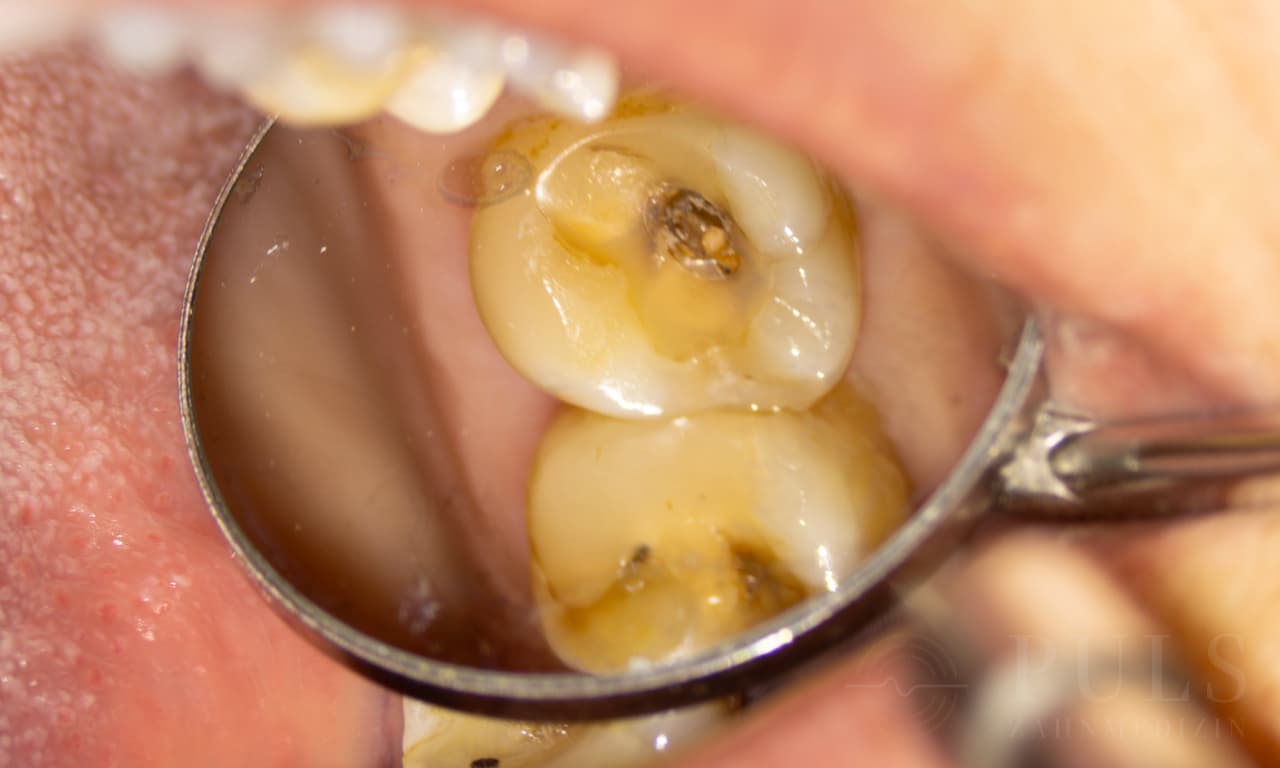 Before
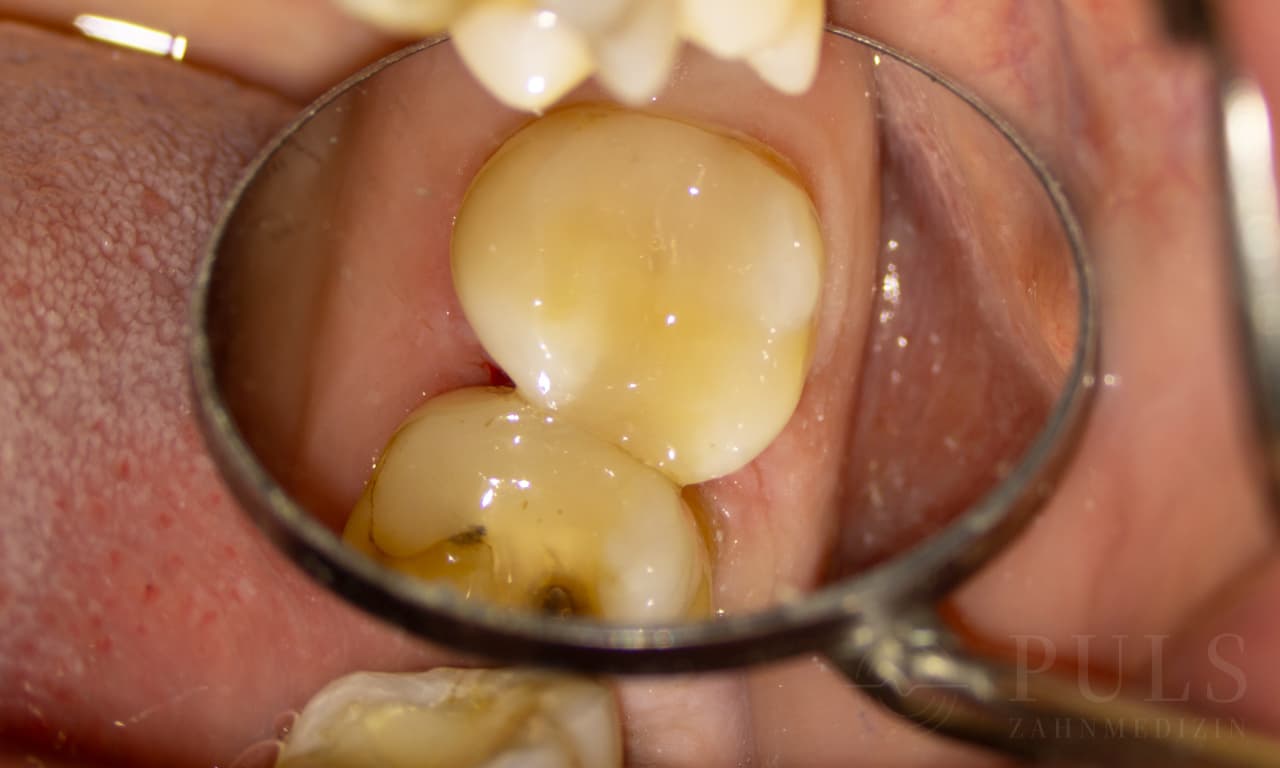 After
AfterPrecise partial restorations made from ceramic or composite — digitally planned, manufactured in our in-house lab
When a tooth defect is too large for a direct filling but a full crown is not yet necessary, inlays, onlays and overlays offer the ideal intermediate solution. These precisely fitting partial restorations are digitally planned and manufactured in our in-house lab — for maximum precision with minimal substance loss.
Selected cases showing treatment stages and results.
Before and after: restoration of a back tooth with an inlay/onlay.
BeforeAfterIndividual results may vary. The treatment results shown are individual cases and do not constitute a guarantee of outcome.
Highest aesthetics and biocompatibility. Tooth-colored ceramic restoration with natural light play. Durable and stain-resistant.
Modern composite materials for more cost-effective restorations. Good aesthetics and easy to repair. Suitable for small to medium defects.
Our integrated MIDAS 3D printer enables digital manufacturing directly in the practice. From intraoral scan to finished restoration — in some cases on the same day.
Precise 3D capture of tooth surfaces — no traditional impression needed.
Computer-aided design of the restoration with optimal fit and occlusion.
Manufacturing with the MIDAS 3D printer or CAD/CAM milling unit directly in our in-house lab.
Adhesive bonding of the restoration. Fine adjustment and polishing for perfect function.
In many cases, same-day treatment is possible. For more complex cases, a temporary restoration is placed.
Composite inlays from approx. 250 EUR, ceramic inlays 400 to 800 EUR, onlays and overlays 500 to 1,000 EUR. Statutory health insurance contributes a subsidy equivalent to standard treatment. Digital in-house manufacturing saves external lab costs.
An inlay fills the defect within the tooth cusps. An onlay additionally covers one or more cusps. An overlay (partial crown) covers the entire chewing surface. The choice depends on the extent of tooth damage — the more substance missing, the larger the restoration.
Yes. Thanks to our digital workflow with an integrated 3D printer (MIDAS), we can manufacture inlays, onlays, and overlays directly in the practice — in many cases on the same day. The intraoral scan replaces the traditional impression, and computer-aided manufacturing ensures the highest precision.
Ceramic inlays typically last 10 to 15 years with good oral hygiene and regular check-ups, often significantly longer. Studies show survival rates of over 90% after 10 years.
Costs depend on the material and size. Composite inlays start from approximately 250 EUR, ceramic inlays range from 400 to 800 EUR, and onlays/overlays from 500 to 1,000 EUR. Statutory health insurance contributes a subsidy equivalent to standard treatment.
An inlay is advisable when the defect is too large for a direct filling but sufficient tooth structure remains for a partial restoration. Inlays offer better marginal fit, higher fracture resistance, and longer durability than large composite fillings.
Puls Zahnmedizin at Wilo Health Cube, Wilopark 15, 44263 Dortmund. Opening 2027.
Get in touch